
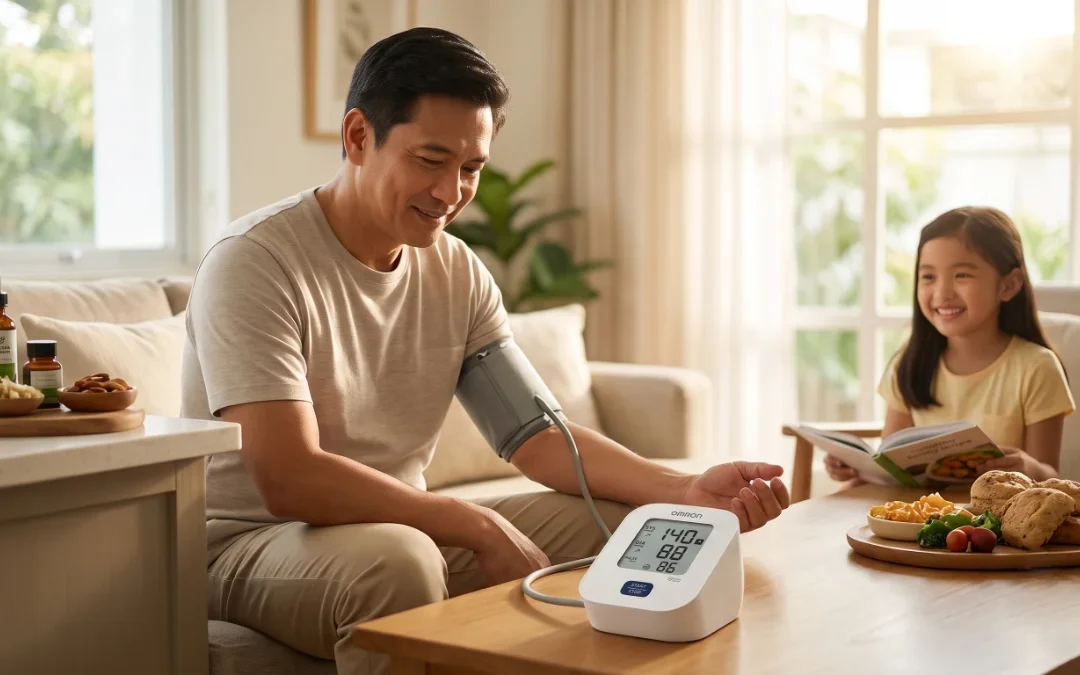
Kamusta, Ka-Optimalliving!
Important disclaimer: This article is for general informational purposes only and is not a substitute for professional medical advice. If you have concerns about your blood pressure, please consult a licensed healthcare professional.
May tanong ako sa iyo: kailan ka huling nagpa-check ng blood pressure?
For most Filipinos, the honest answer is “sa clinic – last year” or “hindi ko na maalala kung kailan” or “hindi ko pa naipa-check.” That gap is exactly why home blood pressure monitors matter so much, especially once you understand how common hypertension actually is in our country.
A quick note on transparency: I have not personally used every device on my Recommended Wellness Finds page(ie. Omron Blood Pressure Monitor), and I think that is more honest than pretending otherwise. For a device like this, I go by what doctors actually recommend, FDA registration, and real buyer feedback on Lazada. The Omron blood pressure monitor consistently comes out on top by all three measures, and here is why.
Why Home Blood Pressure Monitoring Actually Matters in the Philippines
The numbers are honestly sobering. A 2024 World Health Organization report found that 33 percent of Filipino adults aged 30 to 79 have high blood pressure, totaling roughly 16.8 million Filipinos. Of that number, only a small fraction have their condition properly diagnosed and controlled.
The WHO calls hypertension a “silent killer” for good reason. Most people with elevated blood pressure feel completely normal, which means the only real way to catch it early is to actually check your numbers, not wait for a warning sign that may never come until it is too late.
This is exactly why an Omron blood pressure monitor at home changes the game. You are no longer relying on a once-a-year clinic visit to know what is happening inside your own body. You get a real, honest snapshot anytime you need one, and that data genuinely matters for early action.
Why Omron Earned a Spot on My Recommended List
Doctor-Recommended and Clinically Validated
Omron is the brand most widely recommended by doctors here in the Philippines, and this is one of the biggest reasons I trust it enough to recommend it to you. Many Omron models go through clinical validation studies, meaning their accuracy has actually been tested against medical-grade equipment, not just assumed.
For a device you are going to rely on to make real decisions about your health, that validation genuinely matters.
Upper Arm Design for Better Accuracy
The Omron models featured on my Recommended Finds page are upper arm cuff style, not wrist monitors. Upper arm monitors follow clinical measurement standards more closely, since wrist devices are far more sensitive to hand and arm positioning. Even a small angle error on a wrist monitor can throw off your reading significantly.
For tracking numbers consistently over weeks and months, an upper arm cuff simply gives you results you can actually trust from one reading to the next.
Consistently High Ratings From Filipino Buyers
Beyond the clinical reputation, I checked how the product performs in real households by reading through Lazada buyer reviews. The pattern across reviews consistently points to reliable readings and long-term durability, which matters far more to me than a single polished product description.
👉 I’ve included this exact Omron blood pressure monitor on my Recommended Wellness Finds page, alongside a more budget-friendly local brand option if you want to compare before deciding.
How to Take an Accurate Reading at Home
Getting a proper reading is not complicated, but a few habits genuinely improve accuracy.
Rest quietly for at least 5 minutes before measuring, and avoid coffee, cigarettes, or exercise for 30 minutes prior. Sit with your back straight, feet flat on the floor, and your arm resting on a table at roughly heart level.
Take two or three readings, spaced 1 to 2 minutes apart, and average them since a single reading alone can be misleading due to natural fluctuation. Try to measure at the same time daily, ideally morning before medication and again in the evening, and keep a simple log with date, time, and readings for your doctor.
Normal blood pressure sits below 120/80 mmHg. Readings of 130/80 mmHg and above are generally classified as high blood pressure, and anything at or above 180/120 mmHg is considered a hypertensive crisis requiring emergency care.
What to Check Before You Buy
Verify FDA Philippines registration on the listing, or check directly at verification.fda.gov.ph. Buy from the official Omron store or LazMall to avoid counterfeit units, and read the 1-star reviews specifically, since these often reveal patterns of defects that glowing reviews tend to gloss over.
Also confirm that a replacement cuff is sold locally, in case yours wears out after a year or two of daily use.
Frequently Asked Questions about the Omron Blood Pressure Monitor
Q1: Is the Omron blood pressure monitor accurate enough for daily home use? Yes. Omron models are widely validated and recommended by doctors in the Philippines, making them a reliable choice for regular home monitoring.
Q2: Should I get the upper arm or wrist version? Upper arm is generally more accurate and more forgiving of positioning errors, which makes it the better choice for most households, especially elderly users.
Q3: How often should I check my blood pressure at home? For general monitoring, 2 to 3 times a week is reasonable. If you have been diagnosed with hypertension, your doctor may recommend daily checks.
Q4: Can one Omron unit be used by the whole family? Yes, as long as the cuff size fits each user properly. Most standard cuffs accommodate a wide range of arm sizes, but very large or very small arms may need a different cuff size.
Q5: What if my home reading is different from the clinic reading? Small differences are normal due to “white coat syndrome” at the clinic. If the gap is large or consistent, bring your monitor to your next appointment so your doctor can compare both.
Conclusion: A Small Device, A Real Difference
Knowing your numbers is one of the simplest, most powerful things you can do for your family’s long-term health. The Omron blood pressure monitor has genuinely earned its place as a trusted, doctor-recommended name in Filipino households, and it earned its place on my Recommended Wellness Finds list the same way, through real credentials and real buyer trust, not guesswork.
You do not need a hospital visit to start protecting your heart health. Start with a device you can trust, use it consistently, and let the numbers guide the conversation with your doctor.
Alagaan natin ang puso natin habang may pagkakataon pa, Ka-Optimalliving. 💙
Important: I am sharing my journey and research, but I am not a doctor. Please read our full [Disclaimer] before making changes to your health routine.
You can find my exact Omron pick, along with a budget-friendly alternative, on my Recommended Wellness Finds page – available on Lazada PH with Cash on Delivery.
References
- WHO: 33 Percent of Filipino Adults Have High Blood Pressure – Philippine Daily Inquirer: https://newsinfo.inquirer.net/2114818/who-33-percent-of-pinoy-adults-have-high-blood-pressure
- Understanding Blood Pressure Readings – American Heart Association: https://www.heart.org/en/health-topics/high-blood-pressure/understanding-blood-pressure-readings
- Hypertension Disease Background, PRESYON-4 Data – MIMS Philippines: https://www.mims.com/philippines/disease/hypertension/disease-background
The Optimal Setup: Gear for Peak Performance
I’m always searching for practical wellness tools for our community. I’ve recently partnered with Kwikcare to bring you special access to their products. While I’m just beginning to explore their range myself, you can check them out here and use my referral code: ftisagun to support the blog!

Medical Disclaimer
“I am a student of wellness by passion—but I am not a doctor, nutritionist, or licensed medical professional

About Thom Sagun
“I’m a Freelance VA, Computer Technician, father, and fur-parent. After 15 years of navigating the ‘Vampire Shift’ for global clients on different platforms where I get jobs to support my family, I founded Optimal Living PH. My mission is to document the journey of reclaiming my health while working on my own terms practically and to share it with everyone. I’m a researcher and wellness student, passionate about helping fellow independent workers find a better rhythm. Let’s fix the room, fix the rhythm, and build a better life together—it’s never too late to start, Ka-Optimalliving!”