
Kamusta, Ka-Optimalliving!
Important disclaimer: This article is for general informational purposes only and is not a substitute for professional medical advice. I am not diagnosing any condition or recommending any specific treatment here. If you or a loved one has urinary symptoms or any concern about prostate problems in men, please consult a licensed healthcare professional for proper evaluation.
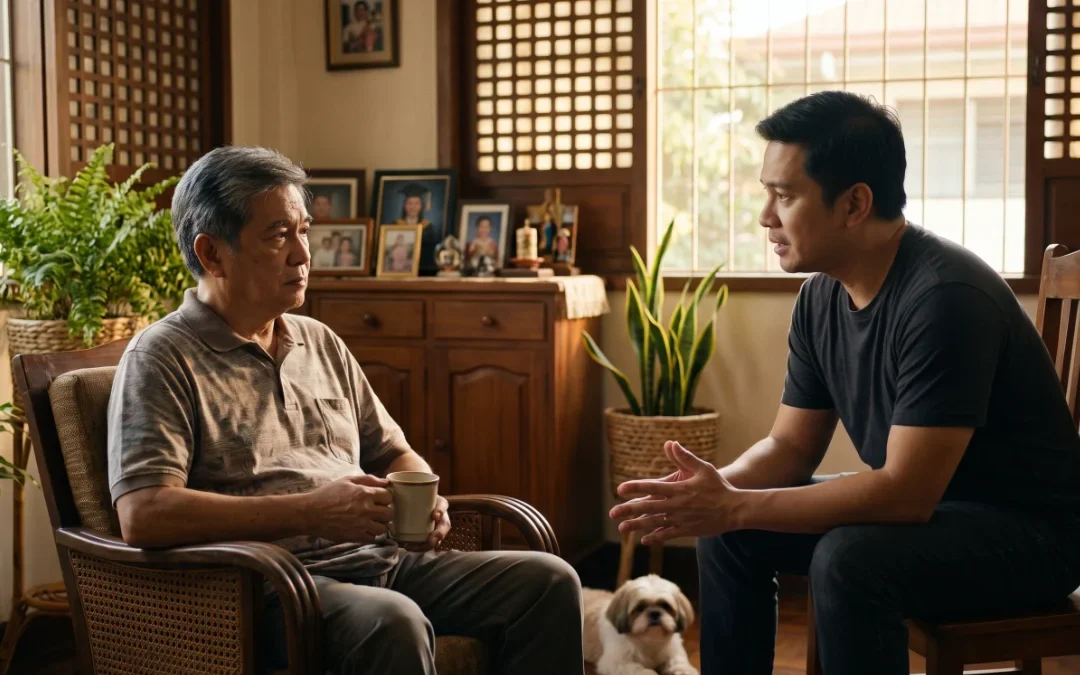
If you have older male relatives, chances are you’ve heard someone say, “He has prostate, he has a hard time trying to pee.” Growing up, I heard adults talk about it all the time, and honestly, that’s all I ever associated the word with. I always thought “prostate” itself was a sickness, a disease that just comes with old age. Am I the only one who grew up thinking that way, simply because it was always older people saying that same line?
Just a few months ago, my cousin told me her father, my uncle, was suffering from “prostate.” He was hospitalized for days because of it. That got me thinking. Now that I’m older myself, I finally wanted to know the truth. Is prostate really a disease, or is it something else entirely? I don’t have personal experience with this one. I do have experience with kidney stones, and from what I always heard growing up, prostate was somehow connected to that too.
Join me as we learn about this together. In this article, you’ll find out what people actually mean when they say “he has prostate,” the real conditions behind that word and how they differ from each other, and why this confusion matters more than we think. Let’s dive in.
What People Actually Mean When They Say “He Has Prostate”
Here’s the first thing I learned, and it honestly surprised me: everybody has a prostate. Every single man is born with one. It’s not something you “get” when you get old, the way you might catch a cold or develop diabetes. It’s an organ, just like your heart or your kidneys, and it’s there your whole life.
So when a Filipino family says “may prostate siya,” what they actually mean, most of the time, is that their relative has developed a prostate problem or prostate disease. The word “prostate” has become shorthand in casual conversation for “something is wrong with his prostate,” the same way some families say “may sugar siya” when they mean diabetes. It’s not wrong exactly, it’s just imprecise, and that imprecision is exactly where the confusion starts.
This kind of shorthand happens a lot in Filipino households, especially around health topics that feel awkward or private to talk about in detail. Prostate problems in men affect urination and, in some cases, sexual function, which are not exactly usual usapang hapag-kainan topics. So families tend to compress the whole conversation into one vague word, “prostate,” and everyone nods along without really knowing which condition is being discussed.
The problem is that “prostate” as an organ and “prostate disease” are two very different things, and there isn’t just one prostate disease. There are several, and they range from completely harmless to genuinely serious. When my cousin told me my uncle “has prostate,” I actually had no idea if she meant something manageable or something life threatening. That ambiguity is scary, and I don’t think our family is unique in experiencing it.
The Prostate in Simple Terms: What It Does and Where It Is
Let’s start with the basics, because I think this is the part most of us skip past when we hear adults talking about “prostate” over merienda.
The prostate is a small gland, roughly the size of a walnut, that sits just below the bladder and in front of the rectum. It’s part of the male reproductive system. It’s located just below the bladder and in front of the rectum, and it’s about the size of a walnut and surrounds the urethra, the tube that empties urine from the bladder. That’s a key detail to hold onto: the prostate wraps around the tube you urinate through, which is exactly why prostate problems so often show up as urinary symptoms.
The prostate’s main job is reproductive. It produces fluid that makes up a part of semen. This fluid makes up roughly a quarter to a third of total seminal fluid, nourishing sperm and helping maintain the right pH for fertility. Outside of that function, most men go their entire lives barely thinking about this gland, until something changes.
And something usually does change, because the prostate is not static. As a man ages, the prostate tends to increase in size, and this can cause the urethra to narrow and decrease urine flow. This growth is a completely normal part of aging for most men, similar to how eyesight naturally changes with age. It’s this age-related growth, and how the body responds to it, that leads to most of the “prostate” conversations happening in Filipino living rooms right now.
Think of it like a garden hose that runs through the middle of a slowly swelling donut. As the donut, the prostate, grows larger over the years, it can squeeze the hose, the urethra, running through its center. That squeeze is where the classic “difficulty peeing” symptom that older Filipino men describe actually comes from.
The Two Most Common Prostate Problems in Older Men
Once I understood that “prostate” wasn’t one disease, my next question was obvious: okay, so what are the actual prostate problems in men that people are talking about? It turns out there are a few, and they matter a lot to tell apart.
Benign Prostatic Hyperplasia (BPH): The Non-Cancer Enlargement
The condition most commonly behind the phrase “he has prostate, hirap siyang umihi” is benign prostatic hyperplasia, or BPH for short. This is simply the medical term for an enlarged prostate that is not cancer. Enlarged prostate is also called benign prostatic hyperplasia, and the prostate gland tends to grow larger with age, which is why it’s very common in older people and rare in those under age 40.
BPH is extremely common. It’s not a rare or unusual diagnosis, it’s closer to an expected part of getting older for men. The histological prevalence of BPH at autopsy is as high as 50% to 60% for males in their 60s, increasing to 80% to 90% of those older than 70 years of age. In plain language: if a man lives long enough, developing at least some degree of prostate enlargement is closer to the rule than the exception.
The word “benign” in benign prostatic hyperplasia is doing a lot of important work in that name. Benign means noncancerous. BPH does not turn into cancer, and it is not, by itself, a life threatening condition. What it can do is cause real, disruptive symptoms, frequent trips to the CR, waking up multiple times at night to urinate, a weak or stop-start stream, and in more advanced or untreated cases, complications like difficulty emptying the bladder completely.
Prostate Cancer: Cancerous, Uncontrolled Cell Growth
The second major condition tied to the word “prostate” is prostate cancer, and this is where families understandably get scared. Prostate cancer is a disease in which cells in the prostate grow out of control. Unlike BPH, where the prostate simply grows larger in a controlled, noncancerous way, prostate cancer involves cells that multiply abnormally and can, in some cases, spread beyond the prostate to other parts of the body.
Here’s something important that gave me a lot of relief when I first read it: most prostate cancers grow slowly and don’t cause health problems. This doesn’t mean prostate cancer should be dismissed or ignored, some cases are indeed aggressive and require timely treatment, but it does mean that a prostate cancer diagnosis is not automatically a medical emergency the way some families fear when they hear the word “cancer.”
Prostatitis: A Third Condition Worth Knowing About
There’s actually a third prostate condition that doesn’t come up as often in casual Filipino conversation, but it’s worth knowing exists: prostatitis, or inflammation of the prostate. Prostatitis is inflammation, swelling and pain, in the prostate gland, and it’s actually the most common type of prostate problem in people under age 50. Unlike BPH and prostate cancer, which mostly affect older men, prostatitis can happen at a younger age and is sometimes caused by a bacterial infection.
I’m only teasing this topic briefly here, because BPH and prostate cancer are what most families mean when they say “may prostate siya” about an older relative. But knowing prostatitis exists helps explain why prostate problems in men aren’t a single, simple category, they’re a whole family of conditions, each with its own cause, age pattern, and treatment approach.
Why “Difficulty Peeing” Gets Associated With Prostate
This is the part of the puzzle that finally made everything click for me. Why does everyone connect “prostate” with trouble urinating?
The urinary symptoms that come with prostate problems in men have a name in medicine: lower urinary tract symptoms, or LUTS. These include needing to urinate frequently, having a weak stream, straining to start, waking up at night to pee, or feeling like you can’t fully empty your bladder. The symptoms of prostate problems include needing to urinate a lot, needing to rush to the bathroom but not being able to urinate or only going a little, leaking or dribbling urine, and having a weak urine stream.
BPH is one of the most common causes of LUTS in older men, precisely because of that garden hose and donut picture I described earlier. As the prostate enlarges around the urethra, it physically narrows the passage urine has to travel through, making urination slower, weaker, and more frequent.
Here’s the crucial nuance families often miss, though: having these urinary symptoms does not automatically tell you which prostate condition is causing them. BPH commonly causes LUTS. But prostate cancer, especially as it progresses, can sometimes cause similar urinary symptoms too. And a range of other conditions entirely unrelated to the prostate, like urinary tract infections or bladder issues, can also cause LUTS. This is exactly why “hirap siyang umihi kaya may prostate siya” is not a diagnosis families should make on their own, it’s a symptom that genuinely needs a clinician’s evaluation to sort out its actual cause.
Key Differences Families Should Know: BPH vs Prostate Cancer
Now that we’ve walked through both conditions individually, let’s put them side by side, because I think this is the comparison most Filipino families actually need when trying to understand prostate problems in men.
The most fundamental difference is nonmalignant versus malignant. BPH is a noncancerous enlargement of the prostate. The cells are growing, but they are not doing so in the uncontrolled, invasive way that defines cancer. Prostate cancer, on the other hand, is malignant. It involves abnormal cell growth that can, in some cases, spread beyond the prostate gland itself.
Another key difference is what each condition primarily affects. BPH’s main impact is mechanical, it physically narrows the urethra and disrupts urination. It rarely threatens life directly, though untreated severe cases can lead to complications like urinary retention or kidney problems from prolonged blockage. Prostate cancer’s danger, when it exists, comes from the potential for cancer cells to grow and spread beyond the prostate over time, which is why early evaluation matters.
It’s also worth understanding that having one condition does not automatically mean you have or will develop the other. Although BPH can increase prostate-specific antigen levels, it is not a risk factor for prostate cancer. BPH occurs primarily in the central or transitional portion of the prostate, while malignancies typically form in the prostatic periphery. They are, quite literally, different processes happening in different areas of the same small gland.
I want to be careful with wording here, because this is exactly the kind of topic where oversimplifying can do harm. I’m not writing this to help anyone diagnose their own relative. The point of understanding these differences is so that when a doctor uses one of these terms, “BPH” or “prostate cancer,” a family isn’t left completely in the dark about what that word actually means and how different the two paths can be.
Common Misconceptions “He Has Prostate” Might Reflect
Growing up hearing this phrase, I picked up a few beliefs about prostate problems in men that, now that I’ve done the research, I realize weren’t quite accurate. I suspect I’m not alone in this, so let’s walk through them.
“Prostate Problems Are Just Old Age, Nothing to Worry About”
It’s true that age is the single biggest risk factor for both BPH and prostate cancer. But “it’s just old age” can become a dangerous excuse to skip evaluation altogether. Age increasing your risk of a condition is not the same as a condition being automatically harmless or automatically not worth checking. My uncle’s hospitalization is a good example, whatever the underlying cause turned out to be, it clearly wasn’t something that could be waved away as “normal lang kapag matanda na ang katawan.”
“Prostate Problems Are the Same as Kidney Stones or Kidney Problems”
This was actually my own personal misconception, and I mentioned it in my intro. I have experience with kidney stones myself, and I always assumed prostate issues were somehow connected to the kidneys. They’re not the same organ system in the way I imagined. The kidneys filter blood and produce urine. The prostate is downstream, near the bladder outlet, and its job is related to reproduction, not filtration. Prostate problems can indirectly affect kidney health in advanced, untreated cases, if urine backs up because of a blocked urethra, that backup pressure can eventually stress the kidneys, but the prostate and kidneys are distinct organs with distinct primary functions. Conflating them, the way I used to, can lead to confusion about symptoms and unnecessary worry, or worse, a false sense that treating one will resolve the other.
“Having Prostate Automatically Means Cancer”
This is probably the biggest and most emotionally loaded misconception, and it’s likely why families react with fear when they hear “may prostate siya.” But as we’ve walked through, most cases of prostate problems in men, especially the ones that come up in casual conversation about difficulty urinating, are BPH, not cancer. BPH is noncancerous and, while it needs proper management, it is not the same emergency that a cancer diagnosis represents. Jumping straight to “cancer” every time someone mentions “prostate” causes unnecessary panic and, frankly, can make families avoid the topic entirely out of fear, which delays the very evaluation that would clarify what’s actually going on.
When to Seek Medical Care: A Safety-First Approach
I want to be very clear about something: nothing in this article is meant to help you or your family diagnose prostate problems in men at home. That’s simply not something an article, or even a well-meaning family member doing research online, can safely do.
What I can say, based on what every source I researched agrees on, is that any new or ongoing urinary symptoms in an older male relative deserve a conversation with a healthcare provider. Providers recommend contacting them if you have symptoms like needing to urinate a lot, weak urine stream, blood in urine, fever, chills, body aches, or pain while urinating. Some symptoms are flagged as more urgent than others, and a provider is the right person to sort out which category a given symptom falls into, not a family member guessing based on what an uncle once said.
To find out if you have a prostate problem, a provider will ask about medical history and symptoms, ask about family health history, do a physical exam that may include a digital rectal exam, and order tests if needed, such as blood and urine tests, a PSA blood test, or a prostate biopsy to diagnose or rule out cancer. This structured evaluation process exists precisely because “difficulty peeing” alone cannot tell a doctor, or a family, which condition is actually present.
If your family is currently navigating this exact situation with an older relative, my honest suggestion is this: don’t let embarrassment or the “normal na yan sa matatanda” mindset delay that first doctor’s visit. Whatever the eventual diagnosis turns out to be, having clarity is almost always better than living with uncertainty and unspoken fear.
Prostate Cancer Care in the Philippines: A Brief Global and Local Context
I think it’s worth zooming out for a moment to understand why prostate problems in men carry extra weight for Filipino families specifically.
Prostate cancer isn’t just a Western health concern, it’s a significant issue globally, including here at home. Researchers studying this exact issue have pointed out real, structural barriers that affect Filipino men’s access to prostate cancer care. Misconceptions, cultural barriers, and negative attitudes about prostate cancer among Filipino men adversely influence health-seeking behavior, while inadequate insurance coverage and high out-of-pocket costs obstruct access to essential care.
Beyond the cultural and financial barriers, there are also practical, geographic ones. Geographic and political factors contribute to the uneven distribution of healthcare resources needed for comprehensive prostate cancer care, including access to medical specialists, essential medicines, and surgical and radiotherapeutic equipment. For families outside Metro Manila or other major urban centers, this can mean longer travel, longer waits, and harder decisions about where and how to get evaluated and treated.
The good news is that this gap is being actively addressed. The Department of Health has designated June of every year as Prostate Cancer Disease Awareness Month, during which the Philippine Urological Association partners with the DOH to train primary care physicians on early detection and screening, increase public awareness, and provide free consultations at institutions specializing in urologic care. Efforts like these exist because the cultural silence around “prostate” as a topic is recognized as part of the problem, not just a harmless quirk of how Filipino families talk.
This is exactly why I wanted to write this article the way I did. The more we as families talk openly and accurately about prostate problems in men, instead of compressing everything into one vague, slightly scary word, the more likely our relatives are to seek care early, when outcomes are generally best.
A Practical Family Checklist: What to Ask a Doctor
If someone in your family has been told “may prostate,” here are some practical, non-diagnostic questions I’d suggest bringing to that doctor’s visit, based on everything I’ve learned researching prostate problems in men.
Ask the doctor to clarify specifically which prostate condition is suspected or confirmed, BPH, prostate cancer, prostatitis, or something else entirely. Don’t be afraid to ask for the term in plain language if medical vocabulary gets confusing in the moment.
Ask what tests or evaluations are being planned or have already been done, and what each one is actually checking for. Understanding the purpose of a PSA test versus a digital rectal exam versus imaging can make the whole process feel less intimidating.
Ask what the treatment or monitoring plan looks like going forward, and what symptoms should prompt an earlier follow-up rather than waiting for the next scheduled appointment.
And perhaps most importantly for us as Filipino families, ask what role family members can play in supporting the patient, whether that’s helping track symptoms, accompanying them to appointments, or simply making sure the topic doesn’t become something whispered about instead of discussed openly.
What This Article Will Not Do
I want to be upfront about the limits of what I’ve shared here, because I think honesty matters more than trying to sound like an expert I’m not.
This article does not diagnose anyone. I have no way of knowing, and wouldn’t attempt to guess, what specific condition any particular reader’s relative might have based on symptoms described online or in a family group chat.
This article is not a replacement for a clinician’s evaluation. Everything here is meant to help you understand the vocabulary and the landscape well enough to have a more informed conversation with an actual healthcare provider, not to substitute for that conversation.
My hope is simply that the next time someone in your family says “may prostate siya,” you’ll have enough context to ask better questions, both to the doctor and to yourselves, instead of just nodding along the way I used to.
Frequently Asked Questions About Prostate Problems in Men
Q1: Is an enlarged prostate the same thing as prostate cancer? No. An enlarged prostate on its own usually refers to benign prostatic hyperplasia, or BPH, which is a noncancerous condition. Prostate cancer is a separate, malignant condition. Having BPH does not mean someone has or will develop prostate cancer, though only a doctor’s evaluation can confirm which condition, or whether both, may be present in a specific case.
Q2: At what age do prostate problems in men typically start? BPH becomes increasingly common starting around age 40 and beyond, with prevalence rising sharply through the 50s, 60s, and 70s. Prostate cancer is also more commonly diagnosed in men over 50, though it can occur earlier, especially with a family history. Prostatitis is somewhat different and can affect men under 50 as well.
Q3: If an older male relative has difficulty urinating, does that automatically mean he has prostate cancer? No. Difficulty urinating, medically called lower urinary tract symptoms or LUTS, is most commonly caused by BPH, a noncancerous condition. While prostate cancer can sometimes cause similar symptoms, LUTS alone cannot tell you or a doctor which condition is present, only a proper medical evaluation can determine that.
Q4: Is prostate disease connected to kidney problems? Not directly, though I used to think so myself. The kidneys and prostate are different organs with different functions. In advanced or untreated cases of prostate blockage, urine can back up and eventually put pressure on the kidneys, but this is a downstream complication, not evidence that prostate and kidney conditions are the same thing.
Q5: What should a family do if a relative is told he “has prostate”? Encourage him to ask his doctor to clarify exactly which condition is being discussed, whether it’s BPH, prostatitis, or prostate cancer, and what evaluation or treatment plan is recommended. Avoid assuming the worst, but also avoid dismissing it as “normal na sa matanda.” An open, informed conversation with a licensed healthcare provider is the safest next step.
Conclusion: Sabay Nating Tanggalin ang Takot sa Salitang “Prostate”
Looking back at how I grew up hearing “may prostate siya” tossed around at family gatherings, I understand now why it carried so much unspoken fear. Nobody explained what it actually meant, so the word itself became a stand-in for something scary and mysterious.
What I learned writing this is genuinely reassuring in some ways and appropriately serious in others. Every man has a prostate, it’s a normal part of the body. Prostate problems are common as men age, especially BPH, and BPH is not cancer. Prostate cancer is a real, distinct condition that deserves proper evaluation, but many cases grow slowly, and outcomes are generally best when caught and managed early. And urinary symptoms, no matter how familiar they sound from stories about titos and lolos, are a signal to see a doctor, not a diagnosis in themselves.
My uncle’s hospitalization was scary for our family, partly because none of us really understood what “prostate” meant beyond that one vague word. I hope that by the time you finish reading this, “prostate” feels less like a scary mystery and more like something you and your family can actually talk about, ask questions about, and act on together.
Kung sinuman sa pamilya ninyo ang naririnig ninyong may “prostate,” huwag nating hayaan ang takot o hiya na maging dahilan para mahuli ang pagpapatingin. Alamin ang totoo. Magtanong. At samahan natin sila.
Important: I am sharing my journey and research, but I am not a doctor. Please read our full [Disclaimer] before making changes to your health routine.
Looking for trusted supplements? Visit my Recommended Wellness Finds page for my personally curated picks – all available on Lazada PH with Cash on Delivery.
References
- Prostate Cancer Basics – CDC: https://www.cdc.gov/prostate-cancer/about/index.html
- Prostate Diseases – MedlinePlus: https://medlineplus.gov/prostatediseases.html
- Benign Prostatic Hyperplasia – StatPearls, NCBI Bookshelf: https://www.ncbi.nlm.nih.gov/books/NBK558920/
- Prostate Cancer – StatPearls, NCBI Bookshelf: https://www.ncbi.nlm.nih.gov/books/NBK470550/
- Prostate Cancer: Symptoms, Causes & Treatment – Cleveland Clinic: https://my.clevelandclinic.org/health/diseases/8634-prostate-cancer
- Overcoming Barriers to Prostate Cancer Care in the Philippines – Frontiers in Urology: https://www.frontiersin.org/journals/urology/articles/10.3389/fruro.2023.1336179/full
The Optimal Setup: Gear for Peak Performance
I’m always searching for practical wellness tools for our community. I’ve recently partnered with Kwikcare to bring you special access to their products. While I’m just beginning to explore their range myself, you can check them out here and use my referral code: ftisagun to support the blog!

Medical Disclaimer
“I am a student of wellness by passion—but I am not a doctor, nutritionist, or licensed medical professional

About Thom Sagun
“I’m a Freelance VA, Computer Technician, father, and fur-parent. After 15 years of navigating the ‘Vampire Shift’ for global clients on different platforms where I get jobs to support my family, I founded Optimal Living PH. My mission is to document the journey of reclaiming my health while working on my own terms practically and to share it with everyone. I’m a researcher and wellness student, passionate about helping fellow independent workers find a better rhythm. Let’s fix the room, fix the rhythm, and build a better life together—it’s never too late to start, Ka-Optimalliving!”